Welcome back to Beyond the Patterns. Today I have the great pleasure to announce Gary
Marcus as one of our invited speakers. Gary Marcus is CEO and founder of Robust AI, well-known
machine learning scientist and entrepreneur, author and professor emeritus at New York
State University. Dr. Marcus attended Hampshire College where he designated his own major
cognitive science working on human reasoning. He continued on to graduate school at Massachusetts
Institute of Technology where his advisor was the experimental psychologist Steven Pinker.
He received his PhD in 1993. His books include The Algebraic Mind, Integrating Connectionism
and Cognitive Science, The Birth of the Mind, How a Tiny Number of Genes Creates the Complexities
of Human Thought, Kluge or Kluge, The Havocert Construction of the Human Mind, A New York
Times Editor's Choice and Guitar Zero which appeared on the New York Times bestseller
list. He edited the Norton Psychology Reader and was co-editor with Jeremy Freeman of The
Future of the Brain. Essays by world's leading neuroscientists which included Nobel laureates
May Britt-Moser and Edward Moser. Together with Ernie Davis he offered rebooting AI and
is well known to deconstruct myths of the AI community. In 2014 he founded Geometric
Intelligence, a machine learning company. It was acquired by Uber in 2016. In 2019 he
founded Robust AI and acts currently as Robust AI's CEO. It's a great pleasure to have him
here and I'm very much looking forward to his presentation and also a vivid discussion
with one of the main critics of pure deep learning.
Thanks very much. I'm glad to be here. This is Vancouver, British Columbia, just outside
of Vancouver, British Columbia where I am calling you from. Sorry that I'm not there
in person. And we need to do something so I can actually. Okay, good. So I think we
all know that current AI is filled with promises. Like Jeff Hinton saying in 2016, it's just
completely obvious that within five years deep learning is going to be better than radiologists
or Elon Musk estimating that in the middle of 2020 Tesla's autonomous system will be
improved to the point where drivers wouldn't have to pay attention to the road. So it's
very easy to get excited about AI. Delivery often falls short. On the left I have a chart
from Hugh Harvey. He put out on Twitter. It's a little bit old but I think it's still probably
roughly correct. The number of AI radiology startups globally was approaching 400. The
number of actual radiologists that was replaced was zero. So a lot of these promises we don't
really deliver on. It turns out that problems are much more difficult than we thought. It
turns out we don't even have enough radiologists because they get scared away because they
think they're going to be replaced. And I have a video. I won't show it right now but
of people trying to get their Teslas just to go across the street. Maybe I can show
the video. Yeah, I can't. That's all right. Just trying to get a Tesla to go across the
street without a human driver can be a pretty dangerous thing. This is the smart summon
feature. And of course the number of people have died in Teslas and so forth. So there's
been a history of over promising in AI. It actually goes back to 1950s. It's nothing
new but I think that we have to ask why. So when people couldn't do great AI in 1950s,
if they were lucky, a K of RAM, they had no data and the processing was measured in hertz
not gigahertz. But we have much more powerful technology. We still have problems. I've been
concerned about deep learning, which is the thing most people talk about all the way back
to 2012 and really back to my book, The Algebraic Mind in 2001. When it first made the news,
it was in the front page of the New York Times in 2012. And I wrote something a couple of
days later saying, hey, slow down. This is interesting. But I said that such techniques
like deep learning, well, I have enough time to read more of it. I said realistically,
deep learning is only part of the larger challenge of building intelligent machines. And I assume
everybody in this audience is familiar with deep learning. But I will remind you that
questions at any point are okay. Such techniques, I said, lack ways of representing causal relationships
such as between diseases and their symptoms and are likely to face challenges in acquiring
abstract ideas like sibling or identical to. They have no obvious ways of performing logical
Presenters
Zugänglich über
Offener Zugang
Dauer
01:03:18 Min
Aufnahmedatum
2021-02-20
Hochgeladen am
2021-02-20 22:56:36
Sprache
en-US
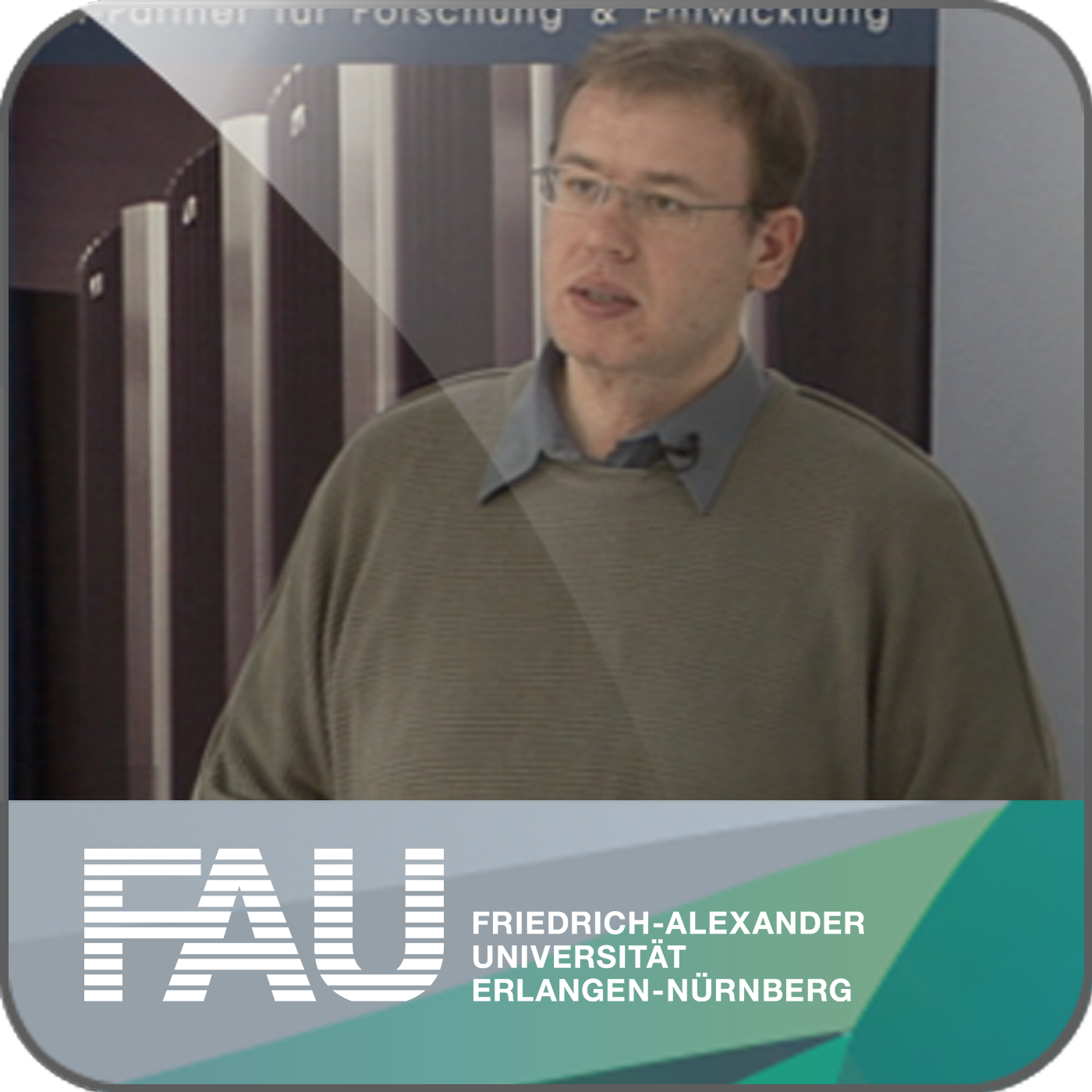
We had the great pleasure to have Gary Marcus as an invited speaker in our series of talks to present his ideas on the next decade in AI.
Abstract: Recent research in artificial intelligence and machine learning has largely emphasized general-purpose learning and ever-larger training sets and more and more compute. In contrast, I propose a hybrid, knowledge-driven, reasoning-based approach, centered around cognitive models, that could provide the substrate for a richer, more robust AI than is currently possible.
Short Bio: Gary Marcus is CEO and Founder of Robust AI, well-known machine learning scientist and entrepreneur, author, and Professor Emeritus at New York State University.
Dr. Marcus attended Hampshire College, where he designed his own major, cognitive science, working on human reasoning. He continued on to graduate school at Massachusetts Institute of Technology, where his advisor was the experimental psychologist Steven Pinker. He received his Ph.D. in 1993.
His books include The Algebraic Mind: Integrating Connectionism and Cognitive Science, The Birth of the Mind: How a Tiny Number of Genes Creates the Complexities of Human Thought, Kluge: The Haphazard Construction of the Human Mind, a New York Times Editors' Choice, and Guitar Zero, which appeared on the New York Times Bestseller list. He edited The Norton Psychology Reader, and was co-editor with Jeremy Freeman of The Future of the Brain: Essays by the World's Leading Neuroscientist, which included Nobel Laureates May-Britt Moser and Edvard Moser. Together with Ernie Davis, he authored Rebooting AI and is well known to deconstruct myths of the AI community.
In 2014, he founded Geometric Intelligence, a machine learning company. It was acquired by Uber in 2016. In 2019, he founded Robust AI and acts currently as Robust AI’s CEO.
Links:
http://rebooting.ai
https://arxiv.org/abs/2002.06177
This video is released under CC BY 4.0. Please feel free to share and reuse.
For reminders to watch the new video follow on Twitter or LinkedIn. Also, join our network for information about talks, videos, and job offers in our Facebook and LinkedIn Groups.
Music Reference:
Damiano Baldoni - Thinking of You (Intro)
Damiano Baldoni - Poenia (Outro)